Jakob Patterson · 27 September 2026
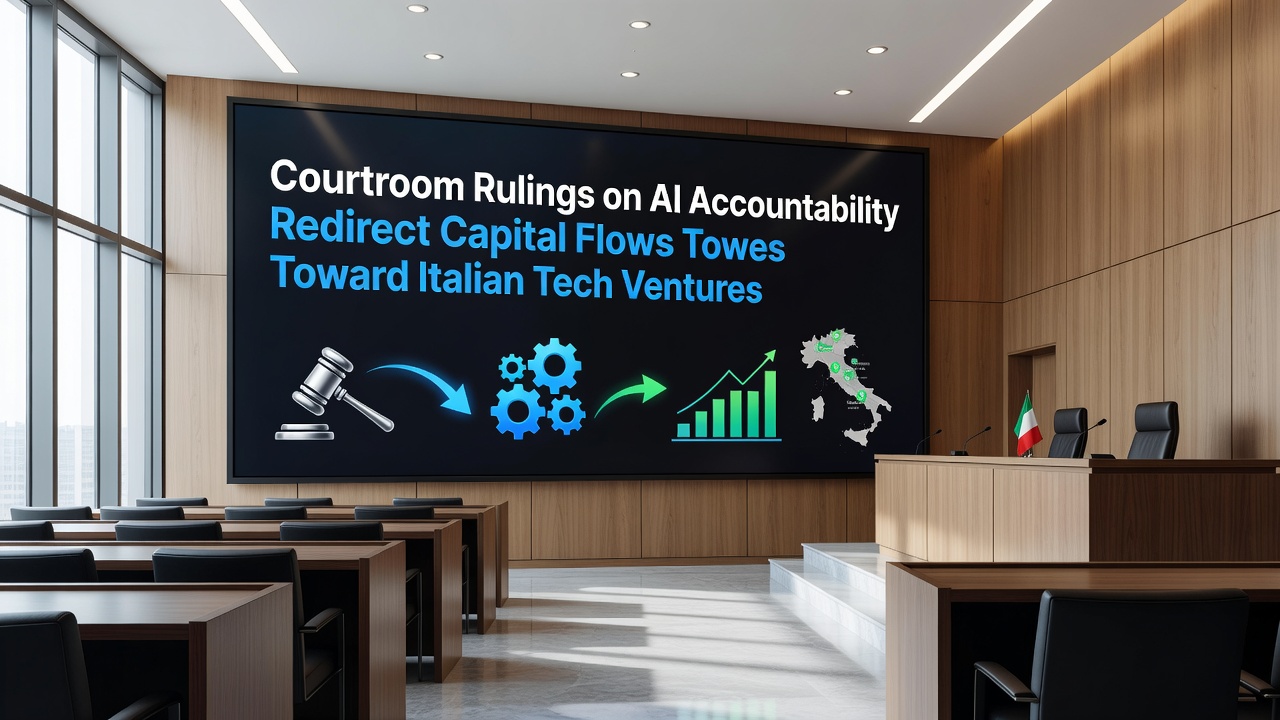
Court Decisions on AI Liability Steer Investor Attention to Italian Technology Startups
Recent courtroom outcomes across multiple jurisdictions have established clearer standards for holding artificial intelligence developers responsible when systems cause harm, and these precedents coincide with increased capital commitments directed at Italian technology ventures. Data from investment tracking platforms shows that funding rounds for AI-related startups in Italy rose by 28 percent in the first half of 2026 compared with the same period a year earlier, according to figures compiled by the European Investment Fund.
Key Rulings Establish New Accountability Benchmarks
A September 2026 decision from the Court of Justice of the European Union clarified liability rules under the AI Act, requiring companies to demonstrate rigorous testing protocols before deployment in high-risk applications such as autonomous vehicles and medical diagnostics. The ruling followed cases in Germany and France where plaintiffs successfully argued that inadequate oversight by AI firms contributed to operational failures, and those verdicts prompted insurers to adjust premiums for European technology companies based on their compliance records.
Observers note that similar cases in the United States District Court for the Northern District of California produced parallel outcomes earlier in the year, with judges emphasizing transparency requirements in algorithmic decision-making. These developments have encouraged venture capital firms to evaluate not only technical capabilities but also legal resilience when allocating resources.
Capital Movement Patterns Emerge in Italy
Italian regions including Lombardy and Emilia-Romagna recorded the largest share of new commitments, with Milan-based accelerators reporting that three AI startups secured Series A funding totaling €45 million during September 2026 alone. Government data released by the Italian Ministry of Economic Development indicates that tax incentives introduced under the 2025 National Recovery Plan have aligned with these legal shifts, drawing attention from funds previously focused on markets with less defined regulatory environments.
One research report published by the OECD in mid-2026 highlighted how liability clarity can reduce perceived risks for investors, and Italian firms have positioned themselves to meet the resulting documentation standards. While traditional manufacturing sectors continue to receive steady support, technology transfer offices at universities in Turin and Bologna have expanded partnerships with private equity groups seeking exposure to accountable AI applications in logistics and precision agriculture.

Industry Responses and Sector Adjustments
Companies operating in the Italian tech scene have responded by strengthening internal governance structures, including the appointment of dedicated compliance officers and the adoption of third-party audit frameworks. Trade associations such as Anitec-Assinform documented a 35 percent increase in membership applications from AI-focused entities between January and September 2026, reflecting heightened interest in collective advocacy around emerging standards.
Academic studies from Bocconi University tracked deal flow and found that cross-border syndicates now include more Italian general partners when evaluating opportunities in explainable AI and federated learning systems. These patterns suggest that courtroom emphasis on accountability has not slowed innovation but has redirected attention toward jurisdictions where legal frameworks offer measurable guidance.
Broader Economic Context and Future Outlook
September 2026 figures from the Bank of Italy show foreign direct investment in the digital economy reaching €2.1 billion year-to-date, with AI accountability themes appearing frequently in investor briefings. Regulatory bodies in Canada and Australia have issued parallel guidance documents that reference European precedents, creating a more consistent global baseline that benefits firms already operating under stricter compliance regimes.
Those who have monitored these trends point to sustained activity in Italian venture ecosystems as evidence that clear liability rules can coexist with growth when paired with targeted support mechanisms. Continued monitoring through the final quarter of 2026 will reveal whether these capital flows stabilize or accelerate further as additional rulings are issued.
Conclusion
Courtroom developments on AI accountability continue to influence where investors place resources, and Italy's technology sector has captured a measurable portion of that movement during 2026. Official statistics and academic analyses indicate that the combination of legal clarity and domestic incentives has produced tangible results in funding volumes and partnership formations. The situation remains dynamic as new cases arise and regulatory bodies refine their approaches across regions.