Blake Braun · 11 October 2026
Milan Design Scene Fuels Fresh Approaches to Sustainable Supply Chains and Urban Renewal Projects
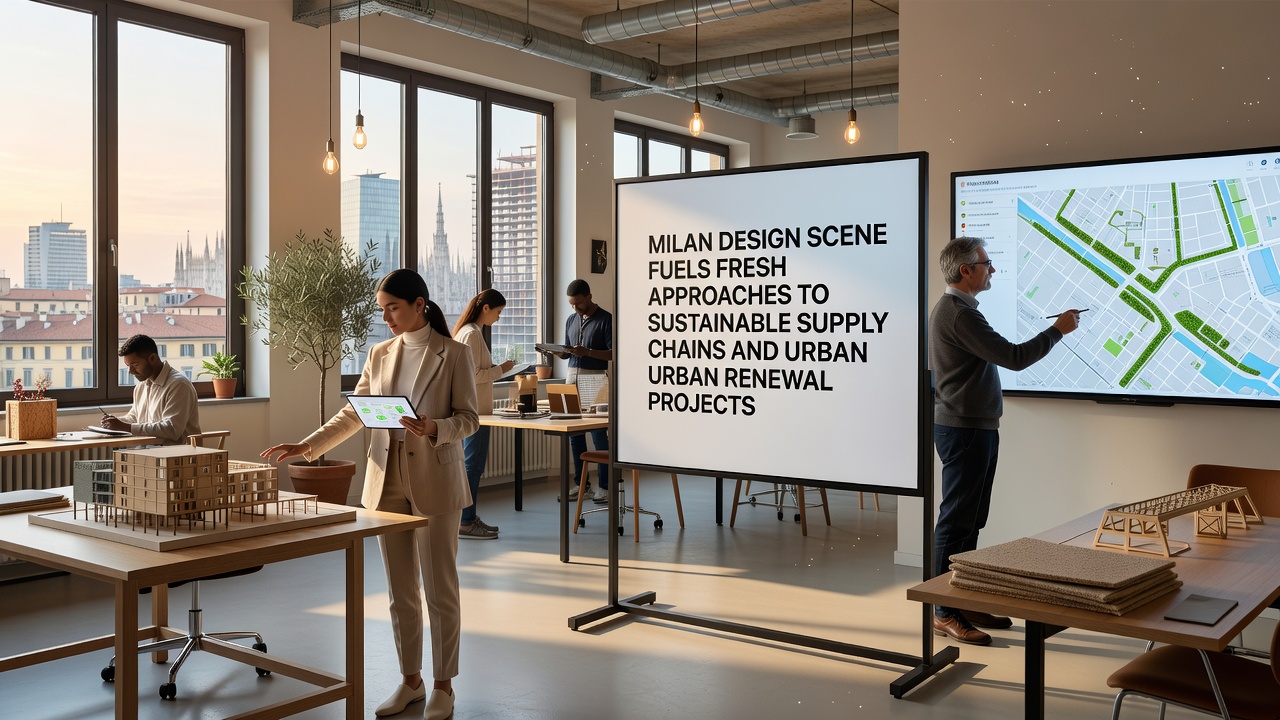
Milan's design community has long shaped industrial practices across Italy, and recent developments show its growing role in reshaping supply chains toward circular models that prioritize recycled inputs and localized production networks. Designers work alongside manufacturers to test modular components that reduce waste, while data from the European Environment Agency indicates Italy's manufacturing sector cut virgin material use by 12 percent between 2023 and 2025. These efforts align with broader EU targets for resource efficiency, and the city's creative networks provide testing grounds where prototypes move quickly from concept to small-batch production.
Supply Chain Experiments Take Root
Studios in the Brera and Isola districts have partnered with logistics firms to map material flows, identifying bottlenecks where single-use packaging dominates. One initiative replaced foam inserts with mycelium-based alternatives derived from agricultural byproducts, a shift that several furniture exporters adopted after pilot runs showed comparable protective performance at lower disposal costs. Research from Politecnico di Milano tracked these trials and found participating firms reduced packaging-related emissions by an average of 18 percent over eighteen months. The same teams now explore blockchain tracing for certified recycled polymers, allowing downstream buyers to verify origin data without adding layers of paperwork.
October 2026 brought fresh momentum when the annual design week featured dedicated tracks on closed-loop systems, drawing supply chain managers from automotive and apparel sectors. Presentations highlighted how Milan's emphasis on rapid iteration helps companies move beyond compliance checklists toward measurable reductions in Scope 3 emissions. Observers note that the city's dense concentration of material suppliers and prototyping workshops accelerates feedback loops that larger industrial clusters elsewhere often lack.
Urban Renewal Projects Gain Design Input
Parallel work extends into neighborhood-scale interventions where design thinking informs both aesthetics and infrastructure. The redevelopment of former rail yards in the Scalo Romana area incorporates modular building systems conceived by local studios, systems that allow future disassembly and material recovery. City records show these approaches cut construction waste by nearly a quarter compared with conventional methods on comparable sites. Planners integrate green corridors and shared mobility hubs, choices that emerged from workshops blending architects, residents, and logistics experts who flagged last-mile delivery challenges early in the process.
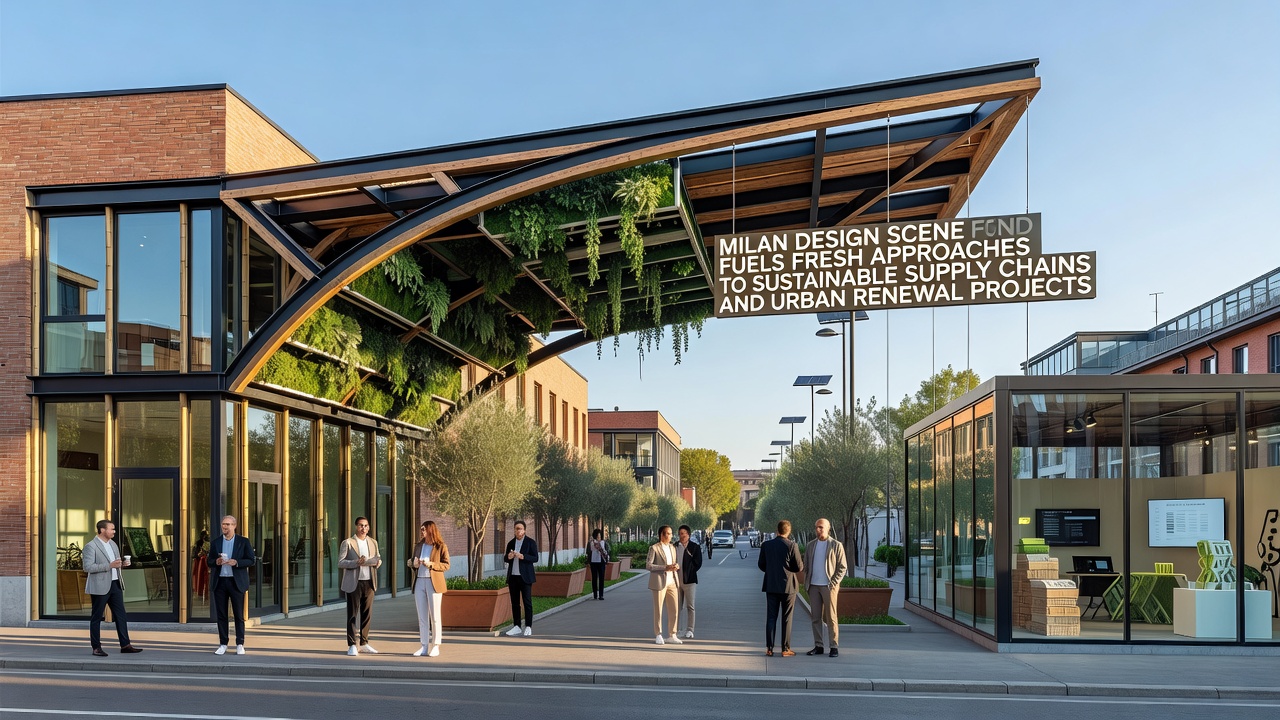
Another project along the Navigli canals tests floating platforms made from reclaimed industrial plastics, an idea refined through repeated studio critiques before full-scale deployment. These platforms support small-scale urban farming that supplies nearby markets, shortening certain food supply routes and demonstrating how design choices can intersect with local logistics. Figures released by the Lombardy regional government in late 2025 reported a 9 percent increase in on-site material reuse across publicly funded renewal schemes, a trend partly attributed to design-led specifications that favor disassembly and reprocessing.
Connecting the Threads
The interplay between supply chain work and urban projects creates feedback that neither domain achieves alone. A component developed for temporary event structures at the Rho fairgrounds, for instance, later informed facade panels used in social housing upgrades, extending the useful life of the original molds and lowering per-unit costs. Such crossovers rely on Milan's compact geography, where a single train ride can take a designer from a materials lab to a construction site for on-site adjustments. Industry reports compiled by the Italian Circular Economy Stakeholder Platform document more than forty active collaborations of this type as of mid-2026, spanning furniture, lighting, and mobility sectors.
External partners contribute specialized data as well. A joint study involving the U.S. Environmental Protection Agency and several European research centers examined how design-driven traceability tools perform across borders, and the findings helped Milan-based teams refine their digital tagging protocols. Meanwhile, academic exchanges with Canadian universities introduced cold-climate insulation techniques adapted for Milan's milder winters, illustrating how local experimentation absorbs and adapts inputs from distant regions.
Conclusion
Milan's design scene continues to serve as a practical laboratory where supply chain adjustments and urban renewal efforts reinforce each other through shared prototypes, material databases, and iterative testing. The patterns observed through 2026 suggest these connections will expand as more sectors adopt the city's preference for verifiable, modular solutions over linear models. Continued monitoring by regional authorities and research institutions will clarify long-term outcomes, yet the mechanisms already in place demonstrate how concentrated creative capacity can translate into measurable shifts in both industrial flows and city fabric.